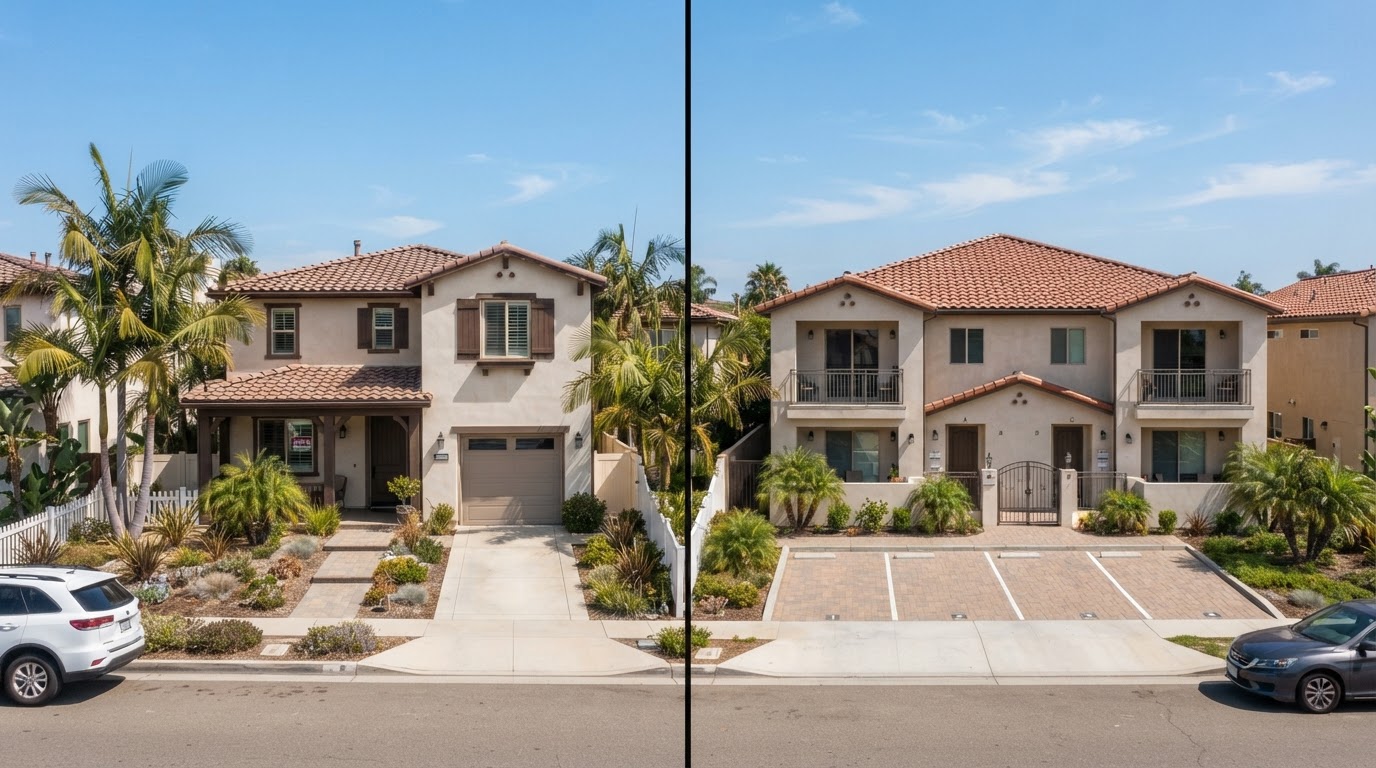
Source: breakdown by Neil Dutta (@arv.finance)
A reverse 1031 exchange lets an investor acquire the replacement property first and then sell the property they already own. A standard (forward) exchange works the other way around, which puts the investor on an IRS clock the moment the sale closes. Neil Dutta, founder of ARV Finance, prefers the reverse structure because it removes the pressure to find a deal in 45 days and lets the investor trade into a property they have already secured.

How a forward 1031 exchange works
In a forward exchange, which the IRS calls a delayed exchange:
- You sell your property.
- The proceeds go to a qualified intermediary (also called an exchange accommodator) and stay there.
- Within 45 days of the sale, you must identify potential replacement properties in writing. The common rule allows up to three.
- Within 180 days of the sale, you must close on one or more of them.
The intermediary has to verify the identification. Miss either deadline and the exchange fails, and the capital gains tax comes due.
The problem with the forward clock
The 45-day window starts when you sell, not when you find a deal. Neil's point is that a tight timeline pushes investors to settle. When the clock is running and good deals are scarce, the risk is overpaying for whatever is available.
How a reverse 1031 works
In a reverse exchange, the order flips:
- You identify and acquire the replacement property first. In practice, an exchange accommodation titleholder holds title to one of the properties during the exchange under an IRS safe harbor, because you cannot own both at the same time and still complete the exchange.
- You then have 180 days to sell the property you already own (the relinquished property).
- You identify the property to be sold within 45 days of the acquisition.
The strategy Neil describes: sell what you own at the best market price you can get, and trade into a value-add deal you have already locked in, so the upside from improving the new property is not lost to a rushed purchase.
Forward vs. reverse at a glance
| Forward (delayed) | Reverse | |
|---|---|---|
| Order | Sell, then buy | Buy, then sell |
| 45-day deadline applies to | Identifying the replacement property | Identifying the property you will sell |
| 180-day deadline applies to | Closing on the replacement | Selling your existing property |
| Pressure point | Finding a deal fast | Funding both properties at once |
| Typical cost | Lower | Higher (extra entity, title holding, legal work) |
Trade-offs to know before choosing reverse
- You need capital or financing for both properties during the overlap, since sale proceeds are not available yet.
- Costs are higher. The titleholder structure adds legal and administrative fees.
- It is more complex. The paperwork must be in place before you close the purchase, not after.
- Qualifying property matters. Exchanges apply to real property held for investment or business use. A primary residence or a property held for quick resale generally does not qualify.
- A 1031 defers tax, it does not erase it. Gain is postponed into the new property.
Frequently Asked Questions
- What is the difference between a forward and a reverse 1031 exchange?
- In a forward exchange you sell first and buy second. In a reverse exchange you buy first and sell second.
- How many days do you have in a reverse 1031?
- You generally have 45 days to identify the property you will sell and 180 days to complete the sale.
- Why would an investor choose a reverse 1031?
- To avoid being forced to buy under a deadline, and to secure a specific value-add property before selling their current one.
- Does a 1031 exchange eliminate capital gains tax?
- No. It defers the tax into the replacement property.
- Do I need a qualified intermediary?
- Yes. Neither a forward nor a reverse exchange can be done without a qualified intermediary, and reverse exchanges also require an exchange accommodation titleholder.
- Should I talk to a tax professional first?
- Yes. Exchange rules are strict, and one missed step can disqualify the exchange.
This article is for general education only. It is not legal, tax or investment advice. Consult a qualified tax advisor and exchange intermediary before starting a 1031 exchange.
Planning a 1031 exchange into a San Diego development project? Ground Zero Development handles acquisition through stabilization on infill projects across the city.
Get in touch