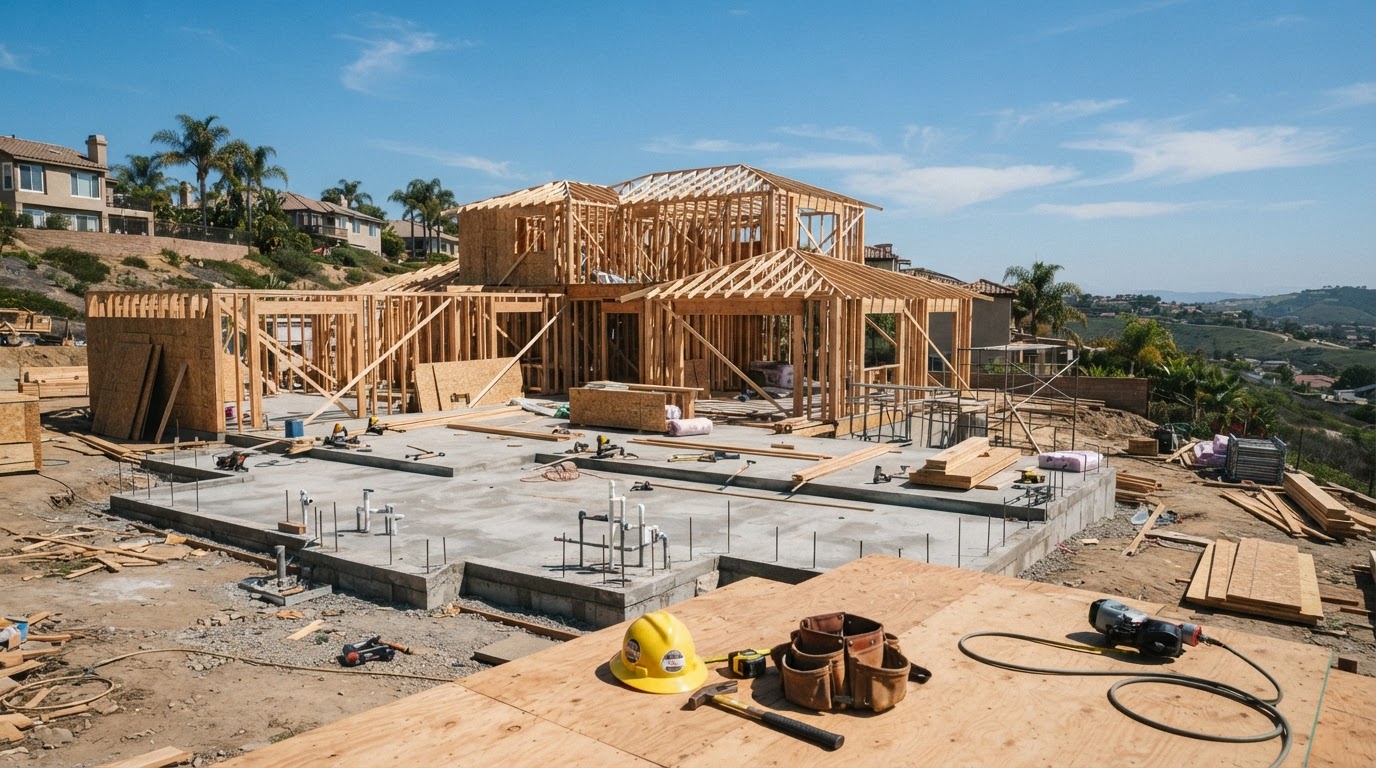
Source: breakdown by Ian Duffy (@scrubs2estates)
A construction loan draw is a payment the lender releases to a developer after a stage of construction is finished and verified. A construction loan gives the developer access to the full loan amount, but the money arrives in installments as work is completed. Ian Duffy, a developer, sums it up as: build, inspect, get paid, repeat.


The short answer
A construction loan draw is a payment the lender releases to a developer after a stage of construction is finished and verified. A construction loan gives the developer access to the full loan amount, but the money arrives in installments as work is completed. Ian Duffy, a developer, sums it up as: build, inspect, get paid, repeat.
How draws work
Ian uses a project that costs roughly $3 million to build as his example. No lender hands over $3 million on day one and says good luck. Instead, the money is released as the building goes up:
- The developer completes a stage of work. For example, the foundation is poured.
- The lender verifies the work. An inspector confirms the work was actually done.
- The lender releases the next payment. That payment is a draw.
- The cycle repeats. Framing is finished, the inspector signs off, and another draw is released, until construction is complete.
The key point from the reel: taking out a $3 million construction loan does not mean $3 million lands in the developer's bank account. It means the developer has access to $3 million, provided the project keeps moving and the work is verified.
Why lenders use draws
- They tie money to progress. Funds go out only after the work they pay for exists.
- They reduce risk for the lender. If a project stalls, the lender has not already paid for work that was never done.
- They keep the developer accountable. The developer has to build what the loan was approved to build.
You only pay interest on what you use
Ian points out that the developer pays interest only on the money actually drawn, not on the whole loan. He calls this "non-Dutch interest" and says he will break it down in his next video.
Illustrative example, not from the reel. The rate and draw amounts are hypothetical.
| Scenario | Balance charged interest | Interest for one month at 10% annual |
|---|---|---|
| Interest on the full $3,000,000 loan | $3,000,000 | $25,000 |
| Interest only on $500,000 drawn so far | $500,000 | about $4,167 |
Early in a project, when little has been drawn, interest costs are much lower than they would be on the full loan. As more is drawn, the monthly interest rises.
What else to expect
General education, not from the reel. Terms vary by lender, so confirm yours.
- Draw requests. The developer usually submits a request showing what was completed and what it cost.
- Inspections or a draw administrator. An inspector or third party typically reviews progress before funds are released.
- Paperwork. Lenders often ask for documents such as invoices and lien waivers from contractors before releasing a draw.
- Holdbacks. Some lenders hold back a percentage until completion. Ask about it up front.
- Cash flow planning. Because draws arrive after work is done, developers often need cash or credit to cover costs between draws.
Frequently Asked Questions
- What is a draw in construction lending?
- A draw is a payment from a construction loan released after a stage of work is completed and verified.
- Does a $3 million construction loan mean I get $3 million up front?
- No. You have access to the full amount, but the lender releases money in stages as work is finished and verified.
- Who verifies the work?
- Typically an inspector, appraiser or a draw administrator on behalf of the lender. Practices vary.
- Do I pay interest on the entire loan from day one?
- In the structure Ian describes, no. You pay interest only on the amount drawn. Loan terms vary, so confirm how your lender charges interest.
- What happens if construction stalls?
- The lender can stop releasing draws. This is one reason lenders require verification at each stage.
- What is the Developer's Dictionary?
- A short video series by Ian Duffy that defines the terms developers use. See the links below for related terms.
This article is for general education only and reflects the author's views and experience. It is not legal, tax, lending or investment advice. Loan terms, fees and requirements vary by lender. Consult a qualified professional before taking on a construction loan.
Planning a ground-up or value-add build in San Diego and want to understand the financing before you commit? Ground Zero Development handles acquisition through construction on infill projects across the city.
Get in touch