Source: breakdown by TJ Miller (@tj_miller)
A formal San Diego lot split can take three months to a year, but some lots were already filed as two separate parcels under one APN, meaning a buyer can skip the split process entirely if they catch it in the title history before closing.

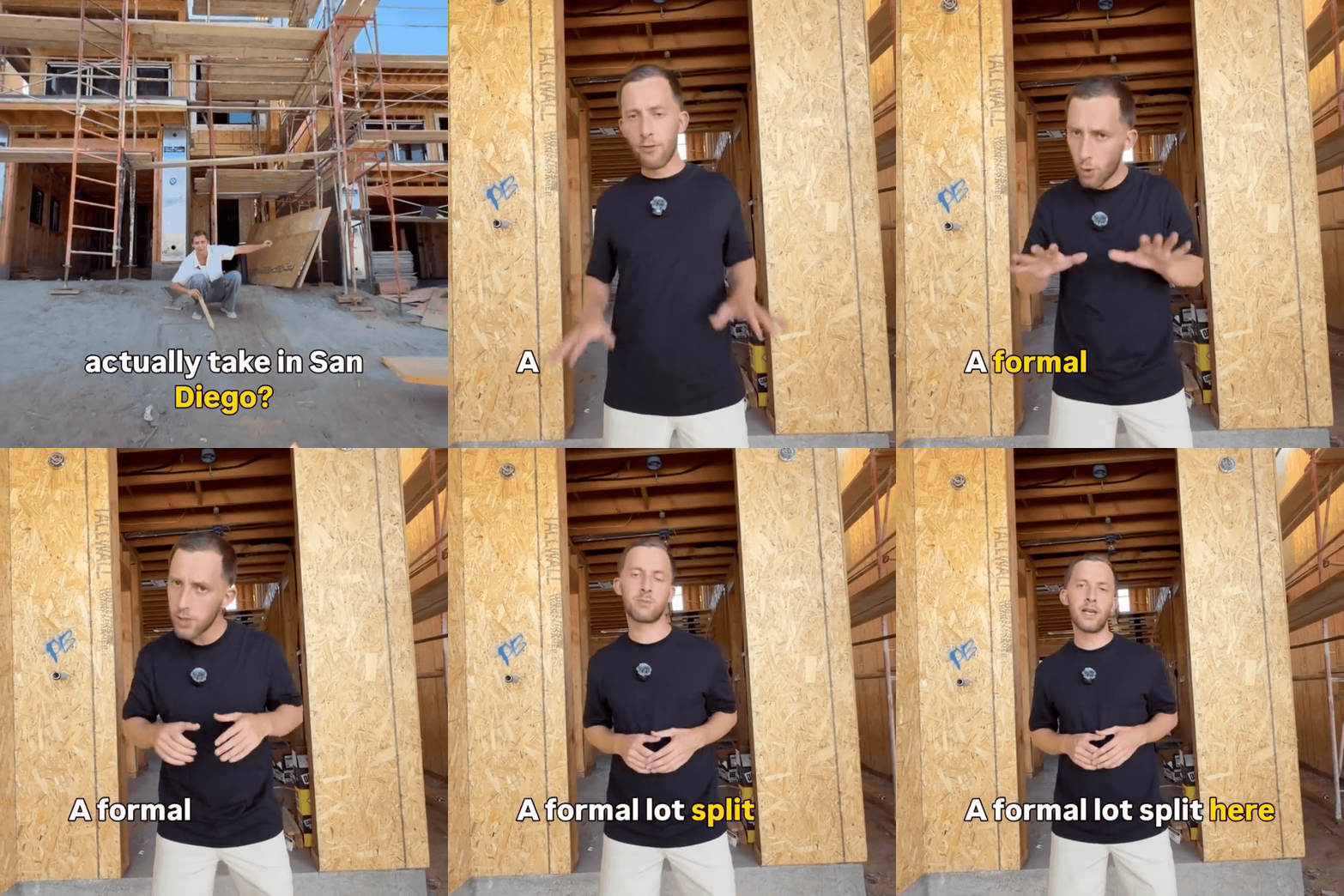
A formal lot split in San Diego takes three months to a year. That timeline alone kills a lot of deals before they start, especially when a lender's construction loan clock is already running. But there's a detail buyers miss constantly: not every lot that looks like "one property" actually is one.
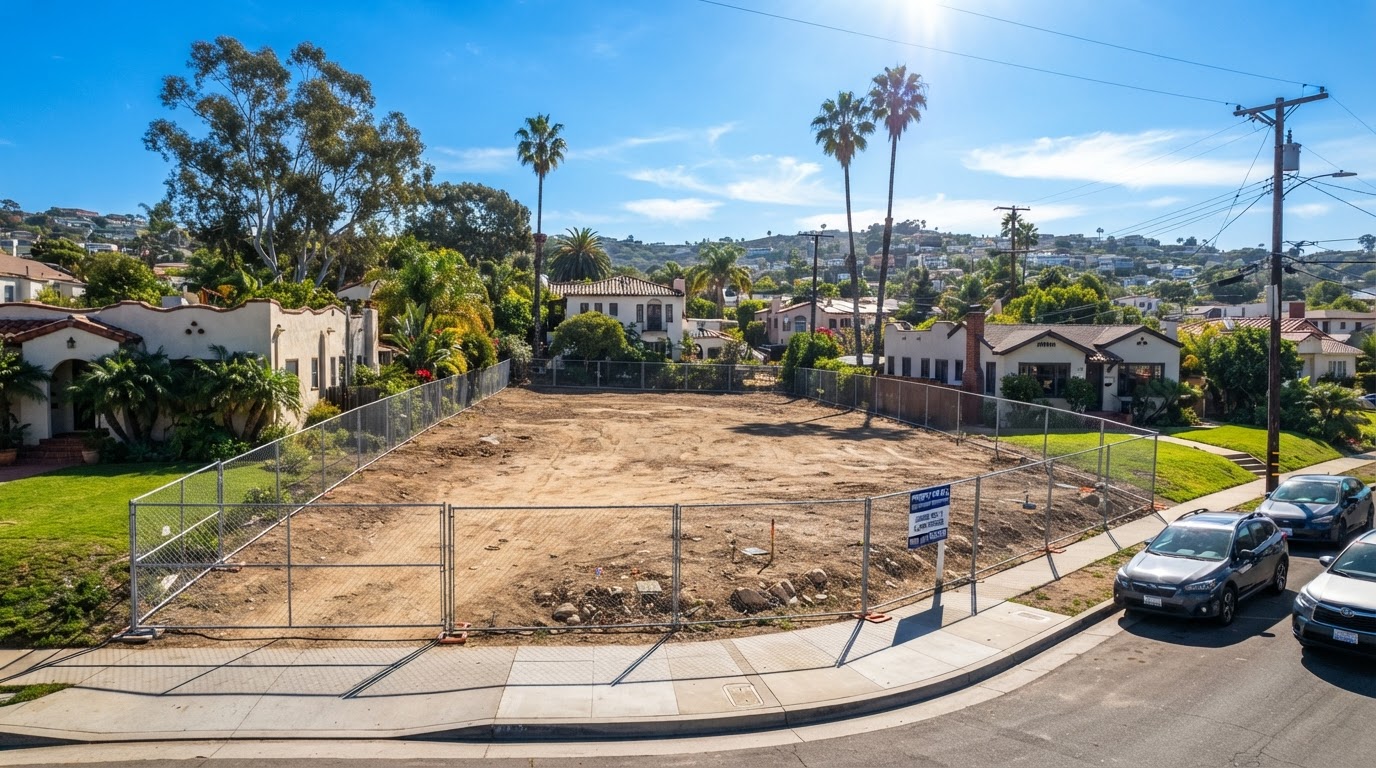
This came up recently in a breakdown from TJ Miller (@tj_miller) on a development deal where the site was originally filed as two separate lots under a single APN (Assessor's Parcel Number). Because the underlying lot lines already existed on paper, the developer never had to go through a formal lot split process at all. That's the kind of thing you only catch if you (or your architect) actually pull the parcel history before you buy.
Check the parcel history before you assume you need a split
Most buyers look at a property, see one building, one address, and assume it's one legal lot. Sometimes it isn't. San Diego has plenty of sites where the county's records still show two or more original parcels that were never formally merged, just built on as if they were one.
If that's the case, you may already have two buildable lots without touching the City's lot split process, which means skipping the survey, the tentative map, the public hearing timeline, and the months of holding costs that come with it.
The catch: you won't know unless you pull the title report and parcel history early, ideally before you're under contract. A good architect or land use consultant can flag this in a day. Waiting until after close to find out is how deals lose months they never needed to lose.
SB9 sounds faster on paper. The numbers say otherwise.
SB9 gets pitched as the fast lane for splitting a single-family lot into two. In practice, San Diego's numbers tell a different story. Between 2022 and mid-2026, the entire city received only 66 SB9 applications. Of those, just 10 lot splits have made it all the way through to completed construction. Four years of the law being on the books, and fewer than a dozen projects have actually crossed the finish line.
That's not a reason to write SB9 off. It's a reason to get a straight answer on whether your specific lot even qualifies before you spend months finding out the hard way. Lot dimensions, existing structures, easements, and neighborhood zoning overlays all affect whether SB9 is realistic for a given site. Ask the question before you buy, not after.
Land loans and construction loans are two different animals
The financing structure on this deal is worth breaking down too. The developer bought the land with roughly 50% down, which tracks with how land loans work here. Raw land has no finished structure, no rental income, and no guarantee the project gets built, so banks treat it as higher-risk collateral and cap the leverage accordingly. Don't expect to buy dirt the same way you'd buy a stabilized, cash-flowing property.
Construction financing came from ARV Finance on an 18-month term, 10% interest, and one point. A point is an upfront fee charged as a percentage of the loan amount, so on a $2,000,000 loan, one point is $20,000, paid at closing, on top of the interest you pay over the life of the loan. Beyond rate and points, most hard money lenders also charge a draw fee every time you pull funds during construction. That's a real cost that rarely makes it into a buyer's back-of-napkin math until it shows up on the settlement statement.
Why this matters before you write an offer
Knowing your lot's actual legal history, and knowing the real all-in cost of your financing (not just the headline interest rate), is the difference between a deal that pencils and one that quietly bleeds months and thousands of dollars. This is the kind of due diligence that has to happen before you're in contract, not after.
This breakdown was built off a reel from TJ Miller (@tj_miller), a San Diego Realtor & Multifamily Investor sharing market insights, deals, and investing content. Original content and account: instagram.com/tj_miller
Have a San Diego lot you're evaluating for a split or ground-up build? Ground Zero Development handles acquisition through stabilization on infill projects across the city.
Get in touch